Getting Ready to Get Ready: The AI Adoption Trap – AI Keynote Excerpt
ChannelNext Central – Toronto Recap
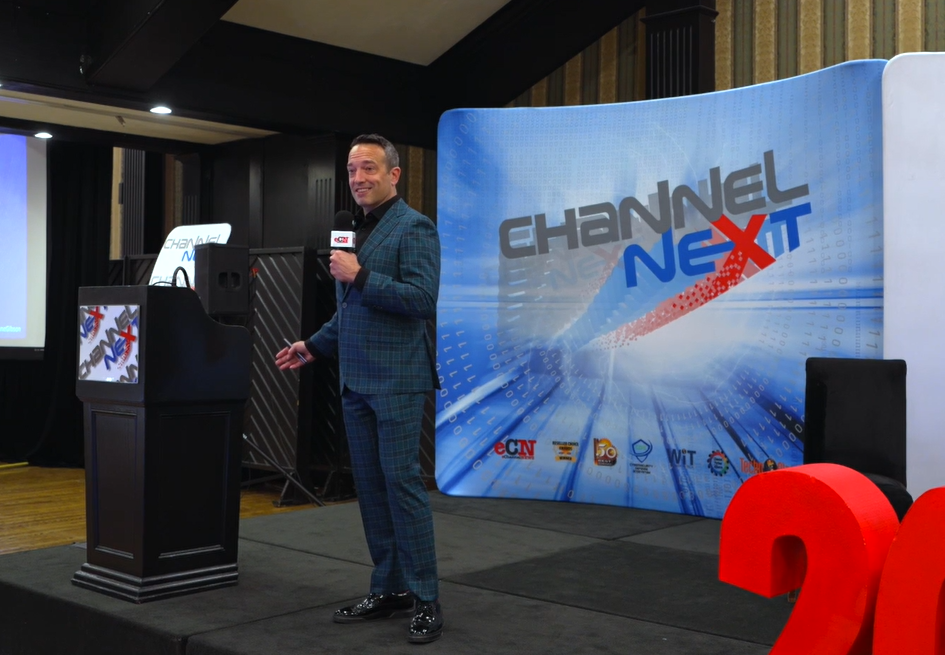
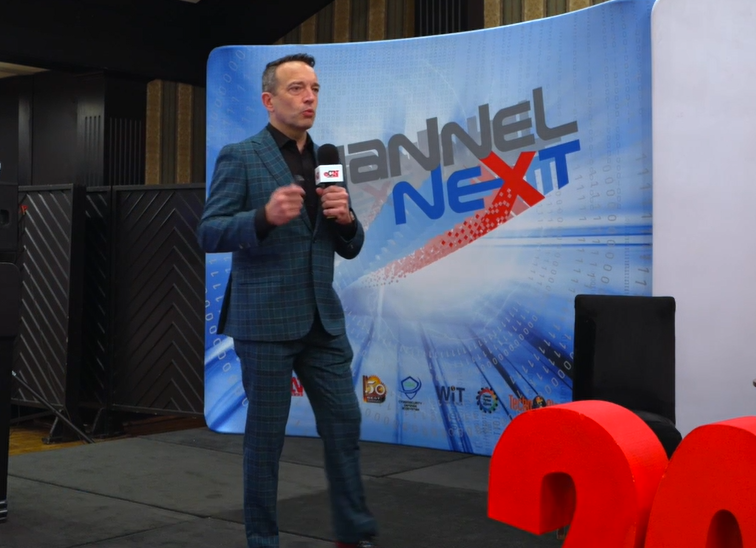
I recently did an AI Sales Keynote in Toronto for ChannelNext, the room was packed with AI forward MSPs, tech vendors and I got to share the stage with a number of talented company founders, channel sales leaders and people developers. Much of the stage content was focused on AI and business cases, where it makes sense (and where it doesn’t).
When I talk to leadership teams about AI, I tend to see organizations make one of two mistakes.
Mistake #1 Buying AI Tools and Hoping for Results:
The first group buys licenses, gives everyone access and assumes the rest will take care of itself. Employees are told they can now use Copilot, ChatGPT or another AI platform, but nobody has spent much time helping them understand where it fits into their work. There is little training, no shared process and often no agreement on what a good result looks like.
A handful of curious people figure it out. Most people use it occasionally to write an email. Some avoid it completely. Six months later, the leadership team wonders why adoption is low.
Mistake #2 Getting Ready to Get Ready:
The second group looks more responsible on paper. They are reviewing security, reorganizing their knowledge base, debating which platform to buy and building governance documents. There are committees on top of committees, and every meeting produces another list of things that must be completed before anyone can run a practical experiment.
I call this getting ready to get ready.
Governance matters. Security matters. The quality and structure of your data matter. But I have watched organizations spend a year discussing AI without putting a useful tool into the hands of somebody doing actual work.
During that same year, one of their competitors may have trained 10 people to use AI properly, built a few simple assistants and improved several repetitive processes. They made mistakes, adjusted their approach and learned where the technology was useful and where it fell over.
That competitor did more than save a few hours. It started building organizational experience.
AI Literacy Is Built Through Use
Leadership teams often begin AI adoption with a platform discussion. Should we use Microsoft Copilot because we already live in the Microsoft environment? Is ChatGPT more flexible? Should we look at Claude or Gemini?
Those are legitimate questions, but the tool is only one part of the decision. Tools do not lead. Mindset, process and workflow design lead. Then you choose the tool that supports the work.
The organization that has used AI for a year has developed capabilities that cannot be installed with a software license. Its people have learned how much context an AI needs, what a useful instruction looks like and how quickly a weak prompt creates a weak answer. They have also learned that a confident response can still be wrong.
“The less you know about a subject, the more impressive an AI-generated answer can sound.”
When you ask it about an area where you have real expertise, you start seeing the gaps. The answer may be well written and mostly correct, but something is off. It missed the commercial context, misunderstood the buyer or recommended a process that would never survive contact with a real sales team.
Developing that judgment takes time. Employees need to use AI against real work, review the result and make corrections. After enough repetitions, they become much better at deciding when AI can help, what information it needs and when a human needs to take over.
This is why the experience gap can grow quickly. A company that begins today can buy the same platform as a competitor that started last year. It cannot buy the hundreds of small experiments, failed prompts, improved workflows and internal examples the competitor accumulated along the way.
The Sales Competency Map Has Changed
I have worked with sales organizations for more than 25 years across 5 continents. During that time, the basic principles of selling have remained remarkably consistent. Buyers still want to deal with people they trust. A good discovery conversation still matters. Credibility still comes from understanding the client, keeping commitments and knowing what you are talking about.
The tools around those principles have changed considerably.
There was a time when a salesperson could concentrate mainly on building relationships, understanding the product and closing business. If the conversation became technical, somebody from the technical team would join the meeting and handle that part.
The modern salesperson needs a wider range of competencies. They have to communicate well in person, over video and through several written channels. An email, a LinkedIn message and a WhatsApp message may contain similar information, but they are not the same form of communication. Each has a different rhythm, level of formality and expectation.
Salespeople also need a working level of Technology Intelligence, or TQ. They do not need to become programmers, but they should understand how technology connects to the sales process and the customer’s business. They need to know how to evaluate a tool, improve a workflow, protect client information and question the output produced by an AI system.
Increasingly, they will also need to build and manage simple AI assistants.
Think about a salesperson preparing for an important meeting. An AI assistant can research the company, review previous notes, identify recent changes and help draft possible discovery questions. That can save a considerable amount of time. But the salesperson still has to decide which information matters, what assumptions may be wrong and which questions would be appropriate for the person sitting across the table.
Domain expertise remains the moat. AI can help a knowledgeable salesperson prepare faster and consider more information. It can also help an inexperienced salesperson produce a very professional-looking bad idea.
We Are Beginning to Manage AI Resources
I have made a shift in the way I think about my own business. I no longer manage only people, projects and technology. I also manage AI resources.
I use different assistants for different jobs. One may help me prepare for a client conversation. Another may review a sales transcript against my methodology. Another may help organize research or turn a keynote transcript into an initial article draft.
These assistants are not interchangeable. Each one needs a clear role, the right source material, examples of good work and boundaries around what it should not do. I also need to review the output. Sometimes the assistant gets close. Sometimes it produces something that looks polished but does not sound like me or reflect how I would approach the situation.
The first draft of this article could be created with AI. It still needs somebody with experience and judgment to challenge it, remove the generic language and decide whether the argument is worth publishing.
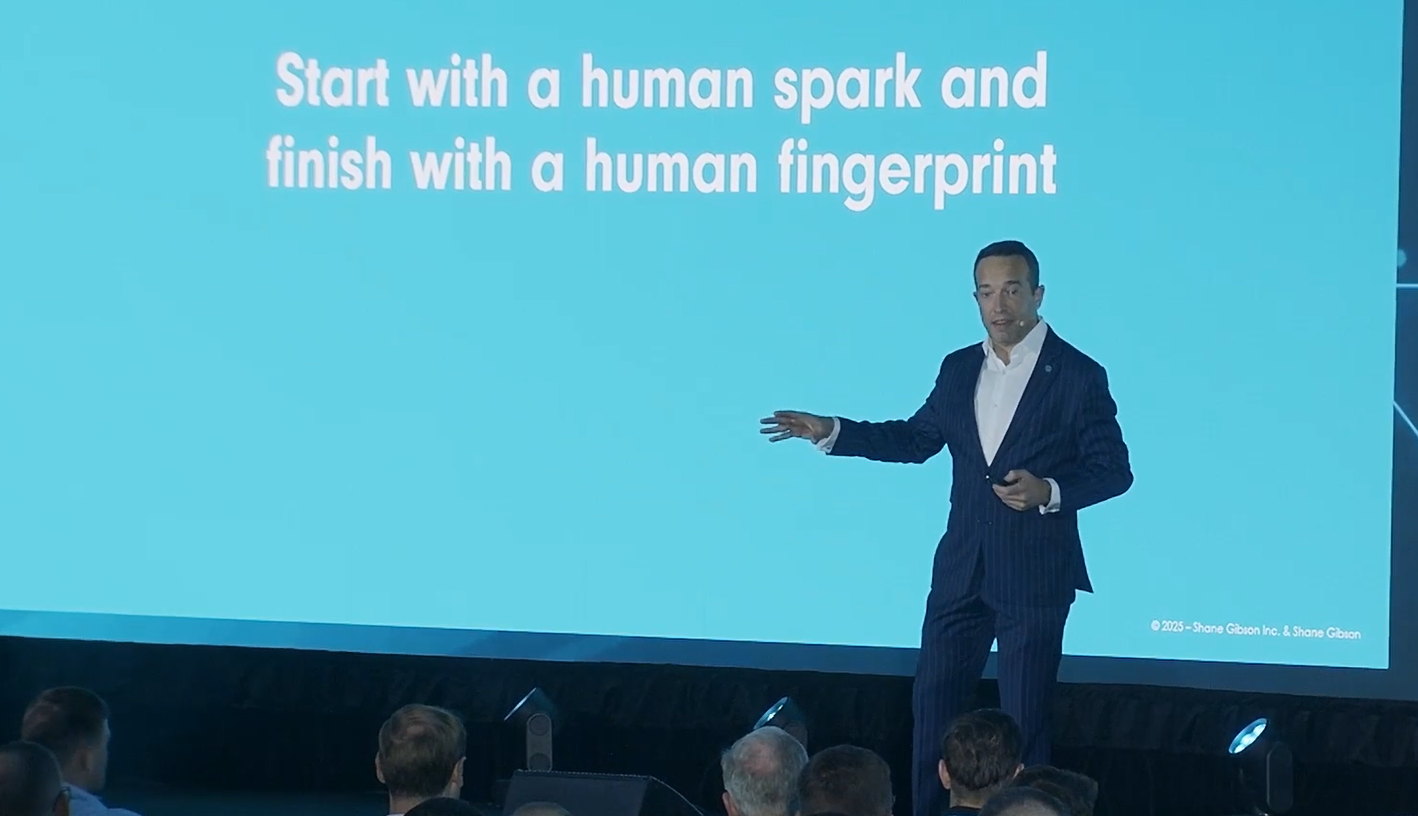
That is what I mean when I say we should start with a human spark and finish with a human fingerprint.
Over the next few years, many knowledge workers will have a collection of specialized AI assistants supporting their role. Sales managers will manage human team members while also supervising systems that conduct research, analyze calls, prepare reports and recommend next actions. Business owners will make similar decisions about where AI should be trusted, where it should be checked and where it does not belong.
This creates a new management responsibility. Somebody has to define the work, provide the standards and evaluate the result. Giving an AI assistant a vague instruction and accepting whatever comes back is no more responsible than giving a new employee a vague job description and never reviewing their performance.
One reason AI projects stall is that the organization tries to solve everything at once. Leaders begin talking about enterprise-wide automation, integrated agents and a complete redesign of how information moves through the company.
Start With a Real Piece of Work
The people expected to use these systems may still be struggling to write a useful prompt.
A better sequence begins with a specific piece of work that already happens regularly. In sales, that might be preparing for a meeting, researching a prospect, summarizing a call, updating the CRM or drafting the first version of a proposal.
Run the task manually with AI first. Learn what information the system needs and what errors it tends to make. Improve the prompt until the output is useful several times in a row. Then turn the process into a repeatable assistant.
Once the assistant works reliably, it can be connected to a larger workflow. An autonomous agent comes later, after the process is understood and the guardrails have been tested.
I learned this lesson partly by doing it the wrong way.
Several years ago, I tested an automated outbound system. I uploaded my ideal client profile, let the system generate thousands of prospects and allowed it to begin sending messages. I went to sleep feeling quite efficient. By the next morning, I had complaints, unsubscribes and a fairly clear demonstration of what happens when you automate before you have established the right process and controls.
Used incorrectly, AI enables you to do the wrong thing in front of more people faster.
Smaller tests limit the damage and improve the learning. They also give employees a chance to build confidence. When somebody creates an assistant that saves an hour every week, they begin looking at their work differently. They start noticing other repetitive activities and asking whether those activities still require the same amount of human effort.
That is how adoption grows. It grows from visible, practical wins, not from a memo telling everybody to use AI more often.
AI Adoption Happens in Stages
Organizations should think about AI adoption as a progression rather than an end state.
The first stage is basic literacy. Employees learn how to give clear instructions, provide context, check an answer and handle confidential information responsibly. They need enough experience to understand both the value and the limitations of the technology.
The next stage is repeatability. Prompts that consistently produce useful work become templates or specialized assistants. The organization begins capturing its own methods, examples and knowledge instead of relying on a general AI model to guess how the business operates.
After that, assistants can be connected to workflows. Information may move from a meeting transcript into a summary, a CRM record and a draft follow-up email. Human review points should remain wherever accuracy, reputation or client trust is at risk.
More advanced automation makes sense after those foundations are working. Skipping ahead usually creates an impressive demonstration followed by a long and expensive cleanup.
AI will also keep changing. Models will be updated, features will move and prompts that worked well 6 months ago may need to be adjusted. I have had updates disrupt workflows I spent considerable time building. It is frustrating, but it is part of working with emerging technology.
This is another reason to teach principles instead of creating dependence on one tool. Employees who understand context, workflow design, evaluation and human oversight can transfer those skills to the next platform. Employees who memorize a few prompts may feel as though they are starting over every time the software changes.
Three Things Leaders Can Do This Week
#1) Identify one recurring business problem. Do not begin with a broad objective such as “increase AI adoption.” Choose a task that consumes time, creates inconsistency or frustrates the people doing it. Define what a useful result would look like and test AI against real examples.
#2) Involve the people who understand the work. A sales administrator, account executive or proposal writer will see risks and requirements that an AI committee may miss. Their knowledge should shape the prompt, the source material and the review process.
#3) Measure capability rather than counting licenses. Look at whether employees are producing better prompts, reducing time on specific tasks, improving the quality of work and sharing successful methods with one another. Five hundred active accounts tell you that people logged in. They do not tell you that the organization is becoming more capable.
The companies making progress with AI are not ignoring governance or taking reckless risks. They are creating safe, practical ways for people to learn while the policies and infrastructure continue to mature.
A year from now, the biggest difference between 2 competing organizations may not be which AI platform they selected. It may be that one organization spent the year debating the decision while the other spent it learning.