The AI Advantage: Why Salespeople Are Being Reinvented, Not Replaced
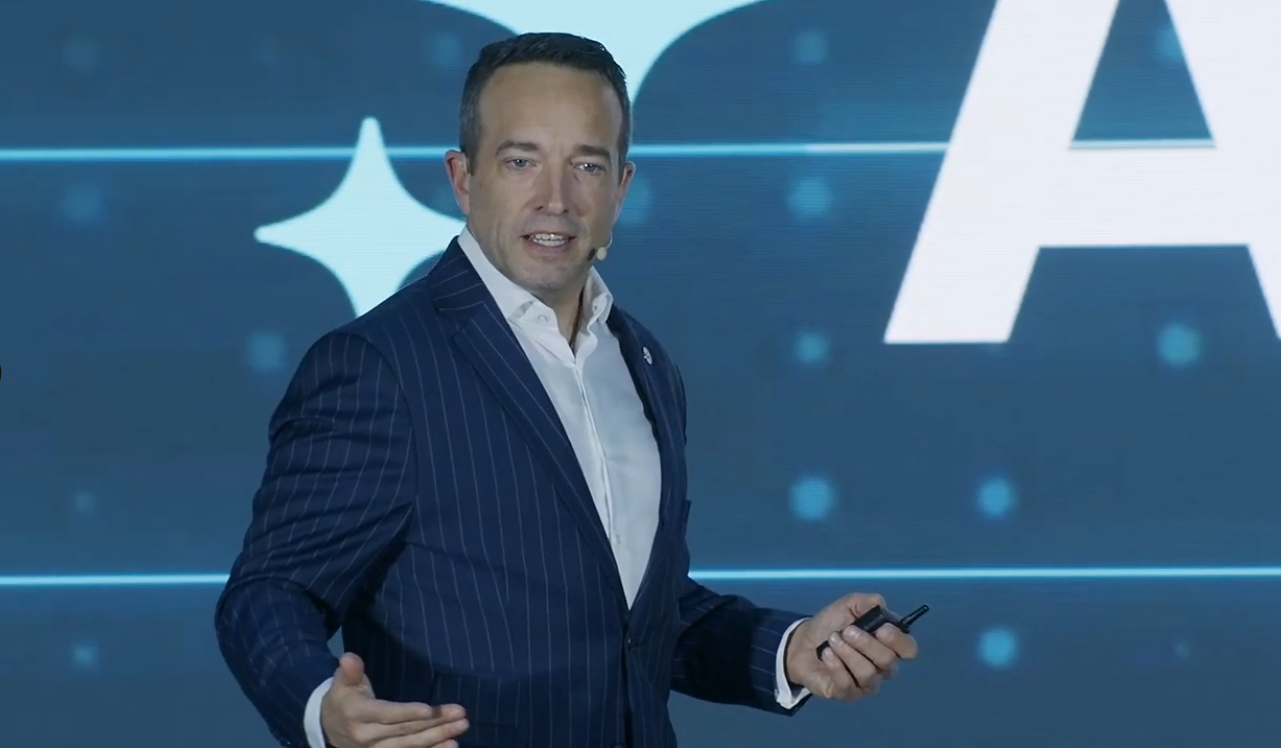
Shane Gibson Delivers an AI Keynote address in Sydney Australia
There’s a noticeable shift in energy whenever artificial intelligence comes up in a sales conversation. I’ve seen it in leadership meetings, training sessions, and even in the informal chats after a talk. People are intrigued by what AI can do, but there’s also a layer of uncertainty. It feels powerful, slightly unpredictable, and for many, a bit uncomfortable.
Most of the sales leaders I work with are navigating that exact tension. They’re curious, but cautious. They’re asking what this really means for their teams, not just in theory, but in how they operate day to day. And instead of jumping too far ahead, I think it’s more useful to start with something practical.
What can we actually do with AI right now that improves how we sell?
What the Data Is Really Saying
A couple of statistics tend to drive the conversation quickly. One study found that 41% of organizations expect 5 to 25% of sales roles to be replaced by AI within the next two years, while 54% anticipate that 26 to 75% of roles will be automated in some way.
At first glance, that sounds like a reduction in headcount.
That’s not what I’m seeing.
In the organizations I work with, the shift is more subtle and more strategic. When someone leaves, leaders are not immediately backfilling the role. Instead, they’re asking whether AI can take on a significant portion of that workload. I was in a session recently where this came up repeatedly. Each time hiring was mentioned, the conversation shifted toward redesigning the role rather than replacing it outright.
So what’s actually happening is not the removal of people. It’s the removal of tasks.
And that’s an important distinction.
The Role of the Sales Professional Is Changing
When we talk about 26 to 75% of roles being automated, what we’re really describing is a shift in how work gets done. A large portion of the activities that fill a salesperson’s day today will no longer require manual effort.
The work doesn’t disappear. It evolves.
In many cases, sales professionals are moving into a position where they are guiding systems rather than being buried in them. They’re managing workflows, interpreting insights, and making decisions supported by AI instead of spending hours executing repetitive tasks. I’ve seen top performers reclaim time that used to be spent inside CRM systems and redirect it toward conversations that actually move opportunities forward.
That’s where they create value.
The Work Salespeople Were Never Meant to Do
There’s a familiar saying in sales that nothing happens until something is sold. These days, the version I hear more often is that it didn’t happen unless it’s logged in the CRM. It gets a laugh, but it reflects a real issue.
I’ve worked with teams where capable sales professionals were spending a significant portion of their week updating records, managing internal processes, and completing tasks that had little impact on closing business. One leader told me their team was spending more time maintaining the system than using it to make decisions, which is not what those systems were designed for.
The problem isn’t the technology. It’s how we’ve structured the work around it.
Where AI Starts to Deliver Real Value
This is where AI begins to make a noticeable difference. Not by replacing people, but by removing the friction that slows them down.
Today, teams are using AI for things like drafting emails, scoring leads, analyzing conversations, and surfacing insights that would take significantly longer to uncover manually. I’ve seen processes that used to take hours reduced to minutes, particularly when it comes to summarizing calls or identifying next steps.
What’s interesting is where most organizations begin. When I ask executives how they’re using AI, the first answer is almost always email writing. It’s a useful entry point, but it’s only scratching the surface.
The real gains show up when AI starts influencing how decisions are made and where effort is focused.
And when that happens, performance shifts. Research shows that 83% of sales professionals using AI have seen increases in deal size, with win rates improving by 41% and sales cycles shortening by 30%.
That’s not incremental improvement. That’s a different level of effectiveness.
Why So Many AI Initiatives Stall
There’s another piece of data that deserves attention. An MIT study found that nine out of ten AI pilots fail within large organizations. That might seem surprising, but it aligns with what I’ve seen in practice.
The issue is rarely the technology itself. It’s the approach.
I worked with an enterprise team that had been working on AI adoption for months. They had strategies, committees, and alignment meetings in place, but no real pilot had been launched. Everything was still in planning mode.
What this often looks like:
- Multiple layers of internal alignment before anything is tested
- Long planning cycles with no real-world feedback
- A focus on getting it perfect before starting
- Internal discussions taking priority over execution
This is what I call getting ready to get ready.
Meanwhile, the teams making progress are taking a much simpler route. They start with a specific use case, test it quickly, learn from the results, and then expand. In a space that’s evolving this quickly, momentum tends to outperform perfection.
AI as an Advantage, Not a Threat
There’s a way to think about AI that tends to resonate with sales teams.
If you’re stepping into a more competitive, AI-driven environment, you don’t want to do it without support. You want something that enhances what you’re already capable of doing.
Think of it as an Ironman suit.
The person inside the suit is still making decisions, still driving outcomes, but now they have greater speed, access to information, and capability. The technology amplifies them.
That’s how AI should be applied in sales.
Not as a replacement, but as an extension of human capability. It allows sales professionals to focus on thinking, connecting, and solving problems at a higher level, while the system handles the heavier, repetitive work.
Why the Human Element Still Matters
There’s also a practical limitation worth considering. The human brain operates on roughly 12 watts of power. Replicating that level of processing with current AI systems would require an enormous amount of energy.
We’re not there yet.
More importantly, even as technology advances, sales is still a human-driven process, especially in complex environments. Trust, context, and judgment play a significant role in how decisions are made. I have yet to see a system navigate a high-stakes, multi-stakeholder conversation with all of its nuance.
That’s still very much human territory.
A Simple Rule for Using AI Effectively
With all of this in mind, there’s one principle that consistently holds true.
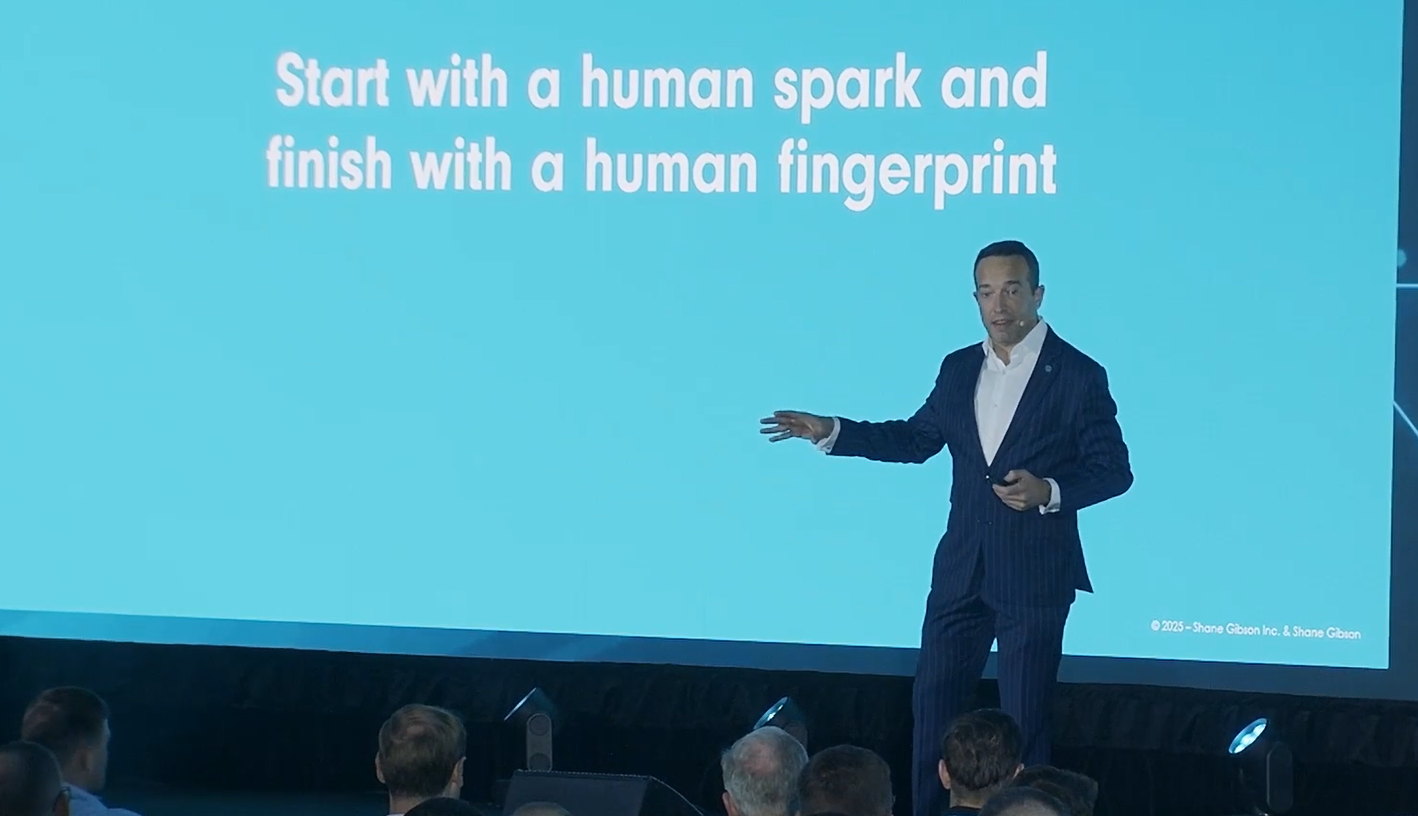
Start with a human spark and finish with a human fingerprint.
If you rely entirely on AI to generate answers, you’ll often get something that sounds reasonable but lacks depth and context. The output reflects a blend of generalized perspectives, not your specific situation.
And the less familiar you are with the topic, the more convincing that output tends to feel.
The value comes from using AI to refine your thinking, not replace it.
Where to Start
When you step back, the opportunity with AI in sales is not about increasing activity. It’s about improving how time is spent. Removing the work that doesn’t create value and doubling down on what does.
If you’re looking for a starting point:
- Look closely at where time is being spent today and identify tasks that don’t require human judgment.
- Test one small, focused AI use case rather than trying to overhaul everything at once.
- Redirect the time you free up into conversations, strategy, and relationship development.
- Build clarity before using AI tools, especially around your messaging and targeting.
- Layer AI into your workflow gradually so it enhances what’s already working instead of creating friction.
The technology will continue to evolve quickly. That part is certain.
What will separate strong teams from the rest is not how fast they adopt AI, but how effectively they integrate it into the way they think, sell, and lead.
Use AI to remove the friction, then focus on the work that actually moves deals forward.