AI Sales Keynote Summary – How MSPs can become AI Enablers.
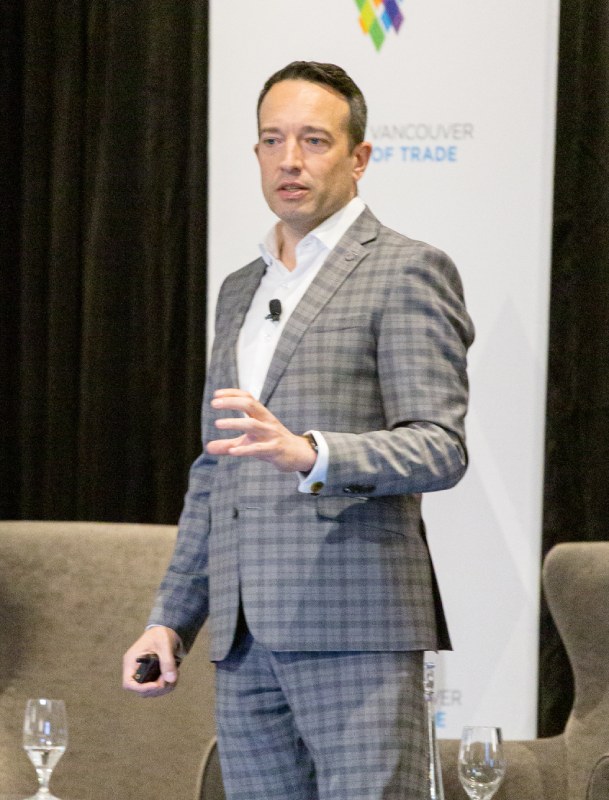
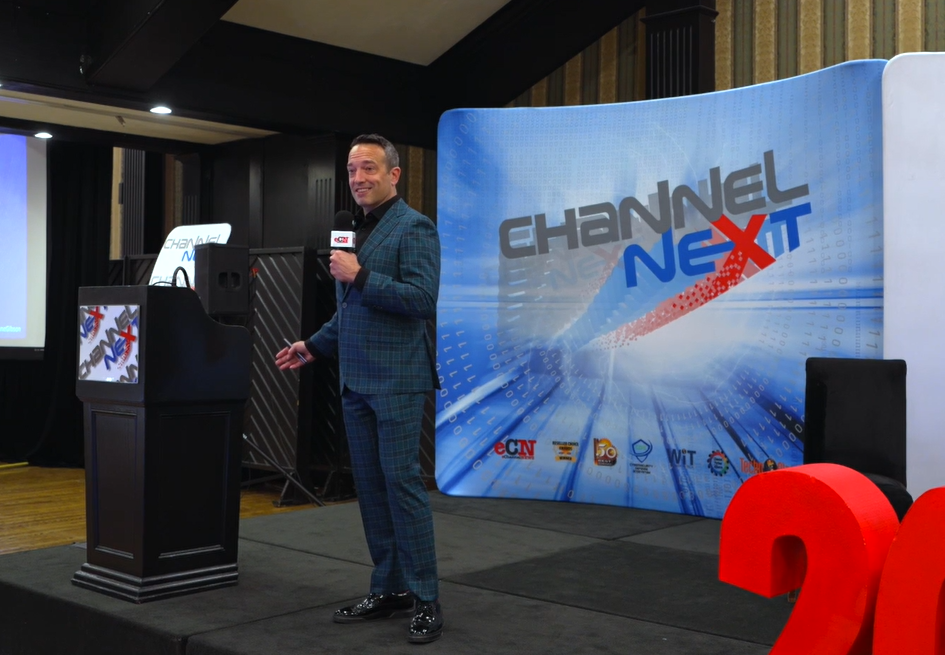
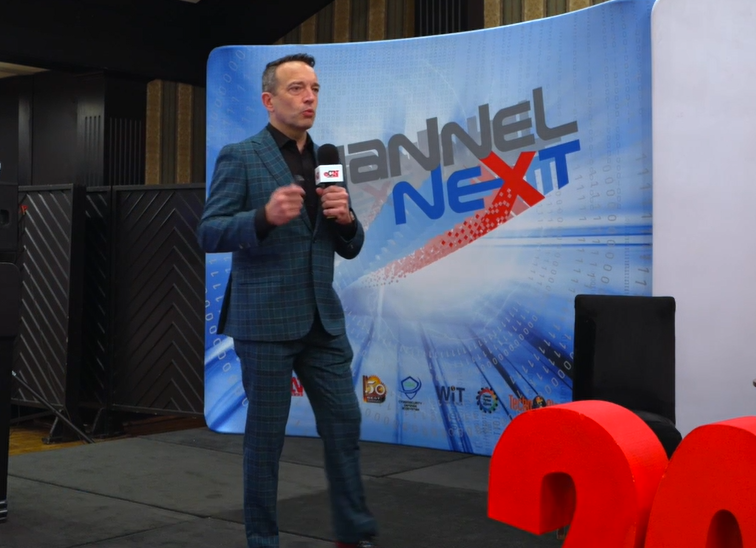
I recently delivered an AI Sales Keynote focused on how MSPs and tech vendors can effectively sell AI and be AI enablers for their clients.
That session, and the transcript that followed, confirmed something I have been seeing for the past two years: most providers are talking about AI, a few are experimenting with it, and very few have a structured way to lead their clients through adoption.
Clients are asking for real guidance. Vendors are pushing AI into everything. The channel is stuck in the middle.
Here’s a condensed version of my AI Keynote for MSPs and IT Vendors:
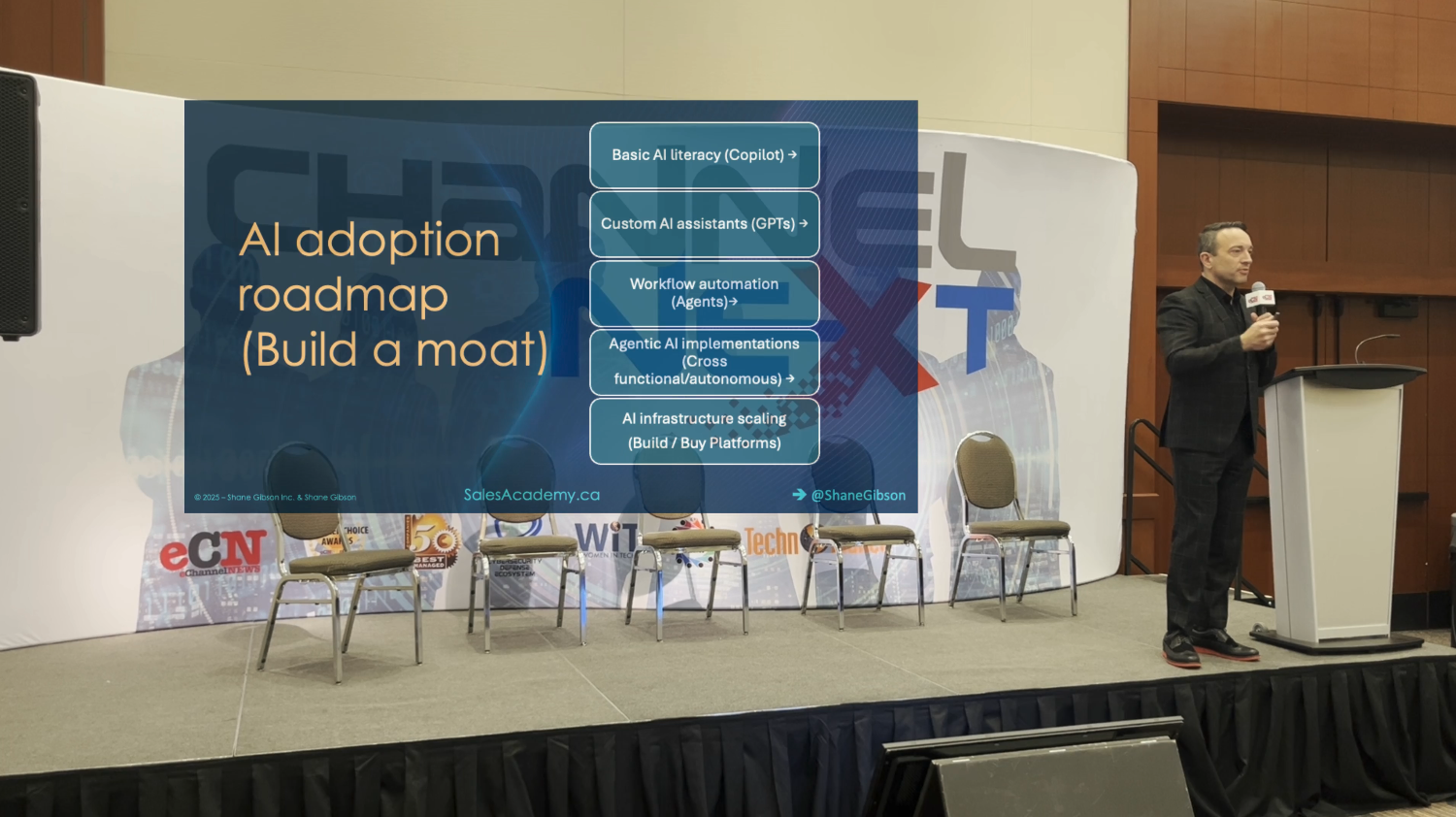
Here’s how to move from “AI reseller” to “AI enabler,” MSPs and agencies need a clear path they can walk with their clients. I think about that path in six stages:
- Reset the mindset and build AI literacy
- Deliver assisted workflows and quick wins
- Create custom assistants and early agents
- Wrap an Ironman suit around revenue and operations
- Capture institutional knowledge and build second brains
- Lead ongoing evolution with discipline, not hype
You do not have to roll all six stages out at once. In fact, you should not. But if you want to build a real competitive moat, these are the rungs on the ladder.
STAGE 1: RESET THE MINDSET AND BUILD LITERACY
Most AI projects die in a conference room long before they touch a line of code. They die because the mental model is wrong.
For years, your clients have used deterministic tools. Spreadsheets. CRMs. Line of business apps. Same input, same output. If a system behaves differently from one day to the next, everyone assumes it is broken.
Modern AI tools do not behave like that. Same prompt, different answers. Answers that depend on context, examples, and the way you ask. That is not a bug. It is the nature of the thing.
Inside every client, and every MSP for that matter, there are two types of users:
- The “button presser” who expects perfection from a single prompt and gives up fast
- The “coach” who treats AI like a junior colleague and is willing to teach it
The button presser types in a vague instruction, gets a messy paragraph back, and decides AI is overrated. The coach gives more detail, adds examples, corrects the tool, and asks, “What do I need to tell you so you give me this quality of output next time?”
Your first job, with your own team and with clients, is to grow more coaches.
Practically, that looks like this:
- Run short, live sessions where you explain in plain language why AI is probabilistic, not predictable, and show the difference with their own emails, reports, or proposals
- Take one real task – a follow up email, a LinkedIn post, a status summary – and walk everyone through three rounds of prompting to show how the output evolves
- Build a simple “prompt starter pack” for each role so people are not staring at a blank chat window
- Set one ground rule: no one is allowed to say “this does not work” until they have tried at least three different ways of asking
Until you reset the mindset, every later stage will feel like pushing a rope.
STAGE 2: DELIVER ASSISTED WORKFLOWS AND QUICK WINS
Once people understand how to work with AI, they need to feel the benefit in their own calendar. Theory does not change habits. Time savings and less friction do.
Look at a typical week inside an MSP, or inside a mid market client you serve. You will see smart people doing the same pattern work over and over:
- Rewriting similar emails from scratch
- Cleaning up meeting notes so they are “client ready”
- Copying information from notes into CRMs, PSAs, and spreadsheets
- Reformatting status updates for different audiences
That pattern work is perfect entry level territory for AI.
Stage 2 is about wrapping AI around workflows that already exist, without changing the core process. Think of it as power steering, not a new engine. For example:
- An email helper that learns your client’s tone and brand and can take a rough paragraph from a salesperson or account manager and turn it into a clear, on brand message
- Meeting note tools that summarize discovery calls or support conversations and push the key fields directly into the CRM or ticketing system
- Drafting boilerplate sections of proposals or statements of work from a small set of bullet points, leaving humans to tune the specifics
- Converting internal announcements into different versions for executives, technical teams, and end users without someone rewriting each one
Everything in this stage stays human in the loop. Nothing sends itself.
The win is simple and visible: people reclaim time and mental energy. When a sales rep sees a follow up email that used to take ten minutes appear in thirty seconds, in their voice, they stop asking if AI is useful. They start asking where else it can help.
That curiosity is your bridge into Stage 3.
STAGE 3: CREATE CUSTOM ASSISTANTS AND EARLY AGENTS
Stage 2 gives you a lot of scattered usage. Stage 3 starts to pull it together.
At this point you will notice that certain people have become the “AI whisperers” inside the client. They have a Notion page or a Word doc full of prompts. They say things like, “If you paste your notes in with this line at the top, it works really well.”
That is your signal. It is time to promote those prompts into real assistants.
My rule of thumb is simple: if someone uses essentially the same prompt three times a week, and the task matters, that prompt deserves to become a custom assistant.
In the MSP and tech vendor world, that often leads to assistants like these:
- A meeting prep assistant that uses an ideal client profile to rate a prospect A, B, or C, then produces a short brief plus the five to seven questions most likely to open up value and risk
- A discovery coach that reads transcripts of sales or renewal calls, scores them against a clear framework, and produces a “what you did well / what to fix” report
- An ICP evaluator that looks at a company through six or seven lenses, such as industry, size, tech maturity, risk profile, and decision access, and tells the seller, “Here is why this is a strong fit, here is where it is weak, here are ten business problems you can probably help with”
On their own, these assistants are helpful. When you start to connect them, you move into early agent territory.
An example to make that concrete:
- A new lead comes in through a web form
- An automation sends the details to the ICP assistant and records the score in the CRM
- If the lead is an A, a meeting prep assistant creates a brief and suggested questions for the assigned rep
- After the first call, the transcript goes to the discovery coach, and the coaching report lands in the rep’s inbox and in the account’s shared workspace
No one has typed the same information twice. No one is guessing which questions to ask. Coaching is no longer “when the manager has time.” It is baked into the process.
As an MSP or AI agency, once you have built a couple of flows like this, you are no longer just the AI person. You are becoming the operational designer. That is a very different conversation.
STAGE 4: WRAP AN IRONMAN SUIT AROUND REVENUE AND OPERATIONS
By Stage 4, your most forward thinking clients are ready for something bigger than isolated helpers. They want AI around their people in the same way a good exoskeleton supports an athlete. It amplifies, it does not replace.
The Ironman analogy is useful. Your best people stay in the suit. AI handles what used to slow them down.
For revenue teams, an Ironman pattern can look like this:
- Target accounts get run through the ICP model and prioritized, so reps are not guessing where to spend time.
- Before each key meeting, a prep assistant builds a one page brief and a discovery guide, so the rep arrives with context and questions, not just a logo.
- During the call, a tuned listener captures the dialogue, tags drivers, risks, objections, and commitments, so the rep can focus on the human in front of them instead of their keyboard.
- After the call, a proposal assistant drafts an executive summary and solution outline that reflect the client’s own language. A follow up email is generated that recaps agreements and suggests next steps.
- A coaching assistant reviews the transcript, scores the interaction against the agreed discovery model, and highlights gaps. Management sees the reports without chasing anyone.
On the operations side, a similar Ironman setup might include:
- AI that triages incoming tickets by type, urgency, and client value, suggesting responses and escalating only what needs senior attention
- Automated knowledge capture where resolutions become draft knowledge base articles that humans review and publish
- Capacity and risk monitors that scan ticket patterns, project data, and SLAs and alert leaders to accounts that are heating up or teams that are stretched
None of this replaces human leadership or judgment. It does remove a huge amount of drag.
As the AI enabler, your job in Stage 4 is to design the suit so it fits. That means understanding the client’s real world processes, not just the org chart. It means choosing where AI is allowed to act and where it must only advise. It means thinking about data, access, and guardrails.
Clients who get to this stage with you will not be shopping you on price. You are now embedded in the way they sell and deliver.
STAGE 5: CAPTURE INSTITUTIONAL KNOWLEDGE AND BUILD SECOND BRAINS
So far we have talked about speed and scale. Stage 5 is about preserving wisdom.
Every organization has a handful of people the rest of the company quietly orbits around. The founder who knows which deals to walk away from. The senior architect who can review a design in five minutes and spot the weakness. The account manager who can reset a tense situation with one phone call.
If those people leave and their way of thinking walks out the door with them, the business takes a hit that is hard to measure until it is too late.
Stage 5 is about helping clients turn that human expertise into living systems that everyone can draw on. Think of these systems as second brains.
A second brain project might look like this:
- You sit down with a senior sales leader and record a series of conversations where you unpack how they qualify, what they listen for in early calls, how they frame value, when they bring up price, and how they handle tough objections
- You turn those conversations into a structured set of principles, checklists, and example dialogues
- You train an internal “sales advisor” assistant on that material so that a new rep can ask, “How should I approach a renewal in this situation?” and get advice that reflects the best of that leader’s judgment
Or:
- You interview the head of security architecture about how they assess risk in different verticals, how they balance cost with resilience, and how they explain trade offs to non technical buyers
- You codify that into a decision tree and a library of explanations
- You build a “design coach” that helps junior engineers think through their plans in the same way
Done well, this work does more than protect the client. It deepens your relationship. You become the partner who helped them keep part of their corporate memory alive, accessible, and aligned with their tools.
That is a moat competitors cannot easily cross.
STAGE 6: LEAD ONGOING EVOLUTION WITH DISCIPLINE, NOT HYPE
AI will keep changing. Models will get smarter, then occasionally stranger. Vendors will bolt new “AI features” onto every product. Regulations will catch up slowly.
Your clients do not need you to chase every new thing. They need you to help them evolve on purpose.
Stage 6 is where you build that guidance into the way you already work together. For example:
- Make AI a standing topic in quarterly business reviews. Talk honestly about what is being used, what is gathering dust, and where people are getting stuck
- Track a small set of meaningful metrics: reduction in proposal cycle time, improvement in discovery scores, time saved on ticket handling, changes in renewal rates
- Keep a visible backlog of “AI experiments” you want to run together. Each experiment should have a clear owner, a simple goal, and a date when you will decide to keep it, fix it, or scrap it
- Continue to invest in people, not just tools. Short, role specific refresh sessions every quarter will beat a single all day workshop that everyone forgets
When you do this consistently, you become more than the team that installed Copilot or wired up a few agents. You become the voice that says, “Here is what to ignore, here is what to test, and here is how we keep this safe and useful.” – That is what real AI enablement looks like.
FINAL THOUGHTS AND NEXT STEPS
If you want to turn this roadmap into something practical, pick one client you care about and walk them through these six stages on a whiteboard. Then agree on the very first step you will take together.
Do not try to sell them the whole journey in one meeting. Help them win at Stage 1 and Stage 2. Once they feel the difference in their day, they will start asking you for Stage 3 and Stage 4. That is how you build bigger deals, deeper relationships, and a competitive moat that is very hard for anyone else to cross.